
The part of us that wants to be seen
Updated: Oct 6
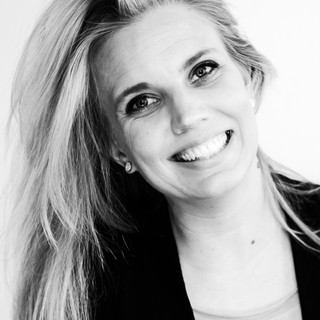
Aleksandra’s story of movement, recognition and making space for what we feel.

After our interview and photo session, Aleksandra found it hard to fall asleep.
The evening had been full: speaking about her life, moving through different emotions in front of the camera, being photographed not only as a dancer but as a person with a story.
She barely slept. Yet the next morning, she woke with an energy she had not felt in a long time.
Later, she wondered if a part of her had simply felt seen.
Not seen for a performance. Not seen because she had done everything perfectly. Just seen.

And perhaps that part of her had been there from the beginning.
Before she knew it was dance
Aleksandra’s grandmother used to tell her that she had been dancing since she was three years old.
She was always moving. Not in a structured way, not because somebody had taught her steps, but because movement seemed to come naturally. Her grandmother noticed and encouraged Aleksandra’s mother to sign her up for dance classes.
Her grandmother was a big presence in her childhood. She helped raise Aleksandra and felt, in many ways, like a second mother: creative, expressive and emotionally open.
By the age of seven, Aleksandra was learning ballroom dancing. She loved the music and the performance. She loved showing herself.

Looking back, she wonders whether dancing gave her something even then: a place where people noticed her. Where teachers recognised her. Where she could be visible through what she could do.
When her dance partner was injured, she had to leave ballroom behind. She could not find another partner at the same level, so she began dancing independently instead.
It became its own kind of freedom.
In her teenage years, she was drawn to hip-hop—the energy, the force, the power in it. At home, after school, she would dance alone in her room. Whatever had happened during the day seemed to find its way into her body.
She did not think of it as processing emotion. She was just dancing.
But perhaps she was already expressing things she did not yet have words for.
When dance became more than dance
For a long time, dance was about performance, classes and choreography. Aleksandra loved the precision of it. She still does.
But when her grandmother became ill and later died, movement took on a different role.

At home, alone, Aleksandra danced through her grief. It did not replace crying or make the loss smaller. It simply gave the sadness another place to exist.
Around the same time, she began training in coaching. A coach noticed her natural connection with her body and suggested that she explore working with people through movement.
That observation stayed with her.
Until then, when Aleksandra taught dance, much of her focus had been on the outside: Is the choreography good? Are the steps working? Does the class look right?
Slowly, her attention turned towards another question.
How does the person in front of me feel?
“I only started focusing on how the people feel.”
That shift became the beginning of O.Dance’s Dance Expression Workshops.
Not here to get the steps right
The words dance workshop can make people hesitate.
What if I cannot dance? What if everyone is watching? What if I do it wrong?
Aleksandra knows those thoughts well. That is why her workshops begin from a different place.
You do not need dance experience. You do not need rhythm. You do not need to know how to move.
There is music, but no choreography to memorise. There is guidance, but no correct way to respond. People arrive, settle into the room, get comfortable with one another and slowly begin to move.
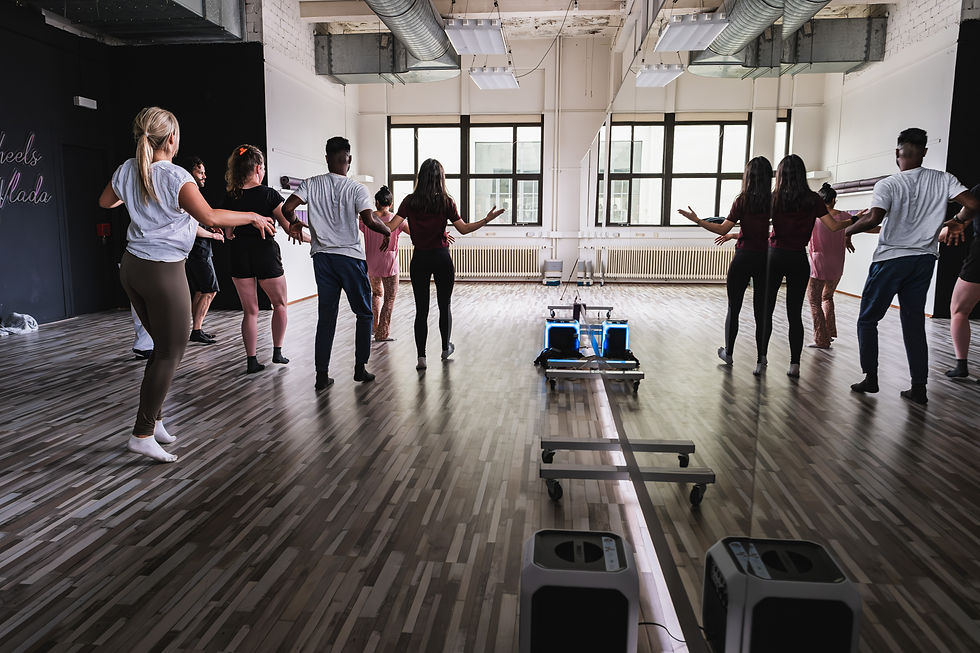
Sometimes the group works alone. Sometimes in pairs. Sometimes together.
Each workshop has a theme—confidence, fear, grief, anger—but each person is free to meet that theme in their own way. They can share what comes up, or keep it private. They can move deeply into an exercise, or take a moment outside the room if they need to.
“You go in as much as you can,” Aleksandra says. “You have to take care of yourself.”
The workshops are open to all kinds of people: beginners and experienced dancers, younger and older participants, people who arrive curious and people who arrive carrying something they cannot quite name.
What matters is not how the movement looks.
Performing an emotion — or feeling it
This is something Aleksandra herself is still exploring.
As a trained dancer, she knows how to perform. She knows how to use music, rhythm and shape. She knows how to make a movement look beautiful or make it appear angry, sad or powerful.
But expressive movement asks something else.
It asks you to stop trying to make it look good.
During our portrait session, we explored five emotions through photographs: joy, confidence, sadness, fear and anger. Not as polished concepts, but as feelings to step into.

Joy came easily. Confidence too. Sadness remained close, connected to the memory of her grandmother.
Anger was different.
It was harder to allow. Harder to show. Anger does not always look beautiful—and in front of a camera, most of us instinctively try to create a version of ourselves that does.
One of the photographs showed Aleksandra kicking into the air. Later, while preparing an
anger-focused workshop, she remembered that image.

It gave her something to return to: the strength in her body, the power in taking up space, the permission not to make the feeling neat.
For her, the photograph became more than a portrait.
It became a reminder.
And perhaps that is also what a portrait can do. It can show someone not only how they looked in one moment, but something they had forgotten they were allowed to feel.
A small permission
Aleksandra speaks openly about the fact that she still gets stressed before workshops. She still has emotions she finds difficult. Anger, especially, is something she is learning to notice instead of immediately pushing away.
If she is at home after a difficult meeting, she might shake out the tension from her body. If she is at the office, perhaps she takes a walk.
She does not suggest that everyone needs to dance their feelings out.
In fact, her advice begins much smaller.
Just notice what you feel.
Let it be there for a minute.
“You do not need to do anything with it,” she says. “Just allow yourself to feel it.”

For someone who has spent a lifetime moving, that may be the most important thing Aleksandra offers: not a perfect sequence of steps, but a little more permission.
Permission to move without performing.
Permission to feel without explaining.
Permission to be seen without having to earn it.
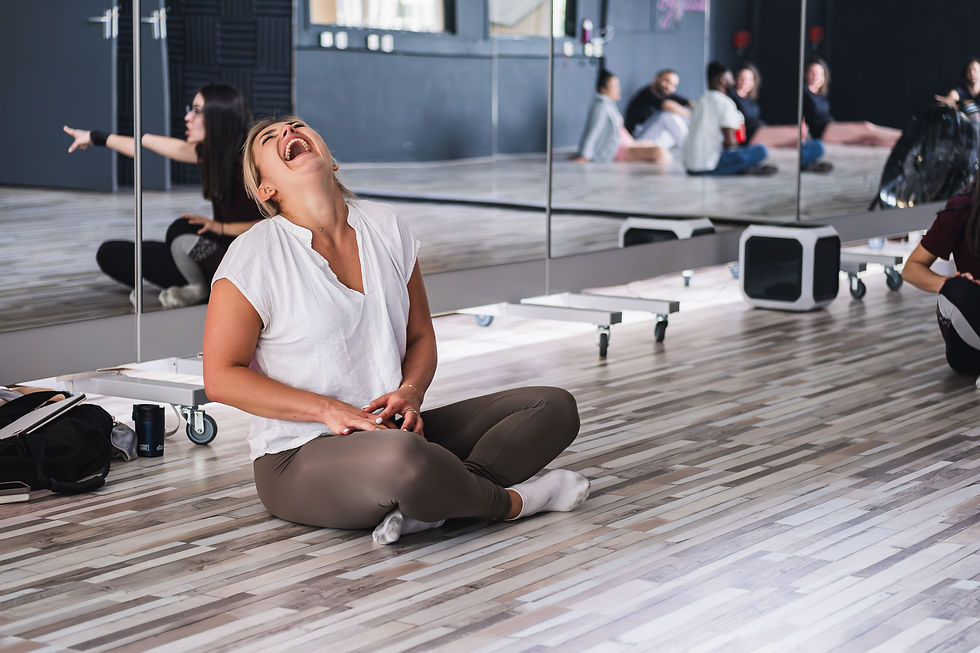
Aleksandra once wrote a letter to herself at eighty. Her wish was simple: never stop dancing.
Not only in workshops or on a stage. In the kitchen. At a festival. With other people. Alone.
Wherever life takes her, movement will remain.
And through O.Dance, she creates a gentle place for others to begin too. You can arrive unsure, self-conscious, completely new to dance—or simply in need of a little more space for yourself. You do not have to perform, explain your story, or get anything right. You only have to arrive with curiosity and allow yourself to see what movement might make possible.
Aleksandra’s Dance Expression Workshops take place in Eindhoven and welcome people of all levels and backgrounds. Explore upcoming workshops and book via odance.nl.
Interview, story and photographs by Natalie, 2 Souls Photography. Interview photograph featuring Natalie and Aleksandra by Ming Zhang. This story is part of an ongoing portrait series exploring the person behind the work—and what can become visible when someone is given space to be seen.


